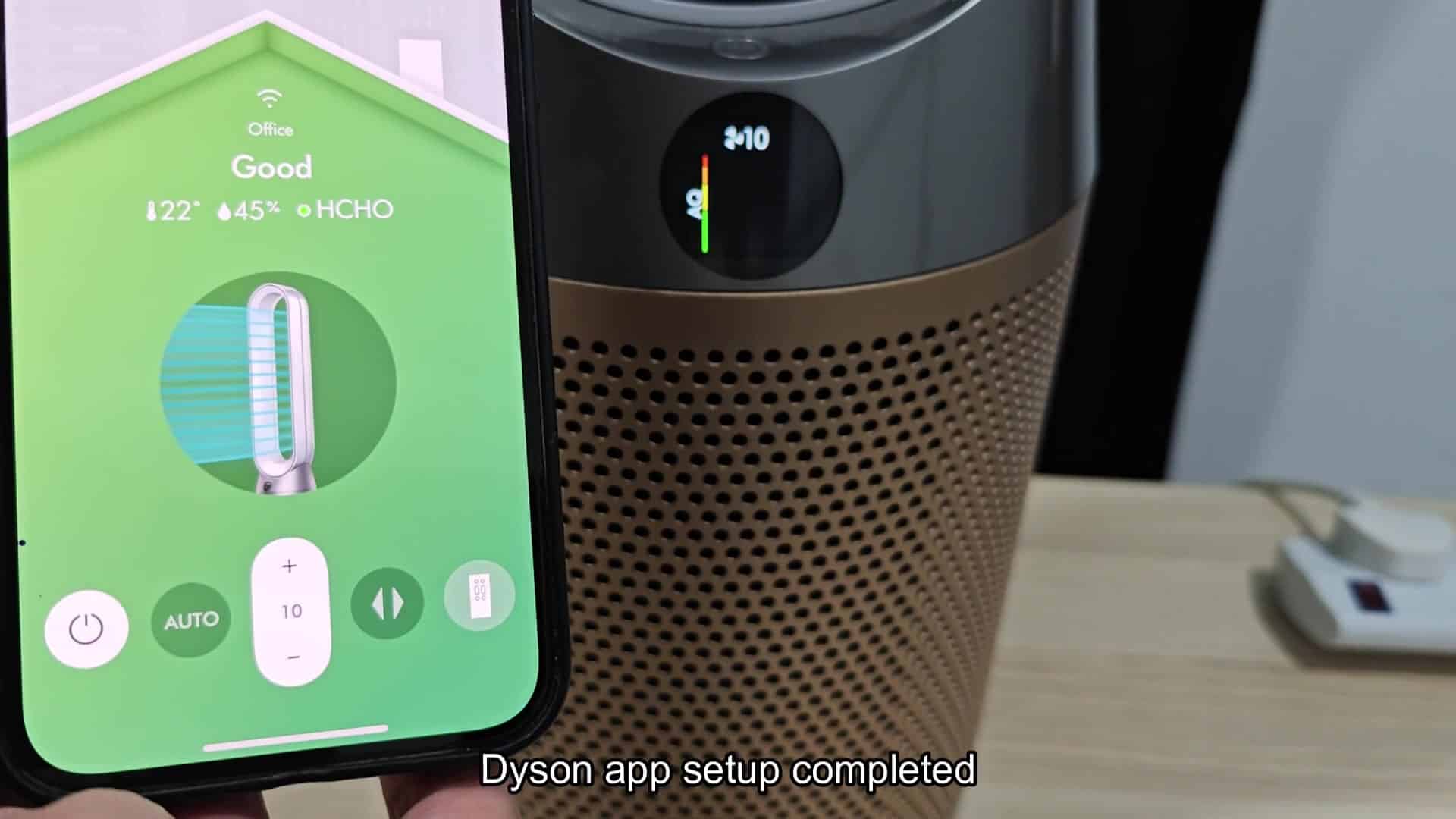
First, you set up your purifier at home and got it working. Auto mode was on so it was reading the air right now. The green bar meant the air was good. It was time to get this online thing going…
You set up the purifier locally first to ensure basic functionality. The display showed air quality readings in real time because auto mode were active with green bars indicating good air. You determined that it was time to get online control working propery.
Completing the Digital Setup
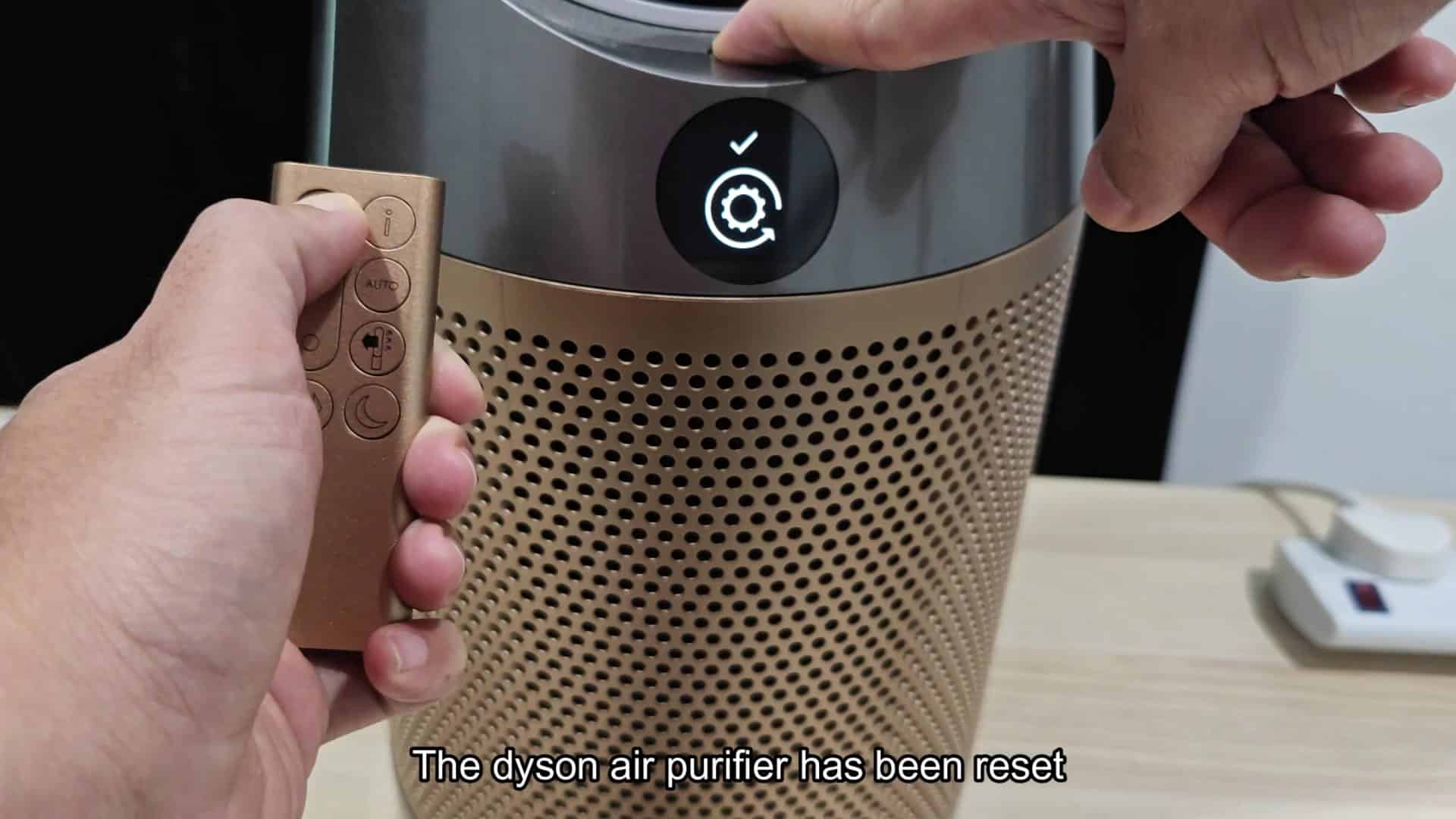
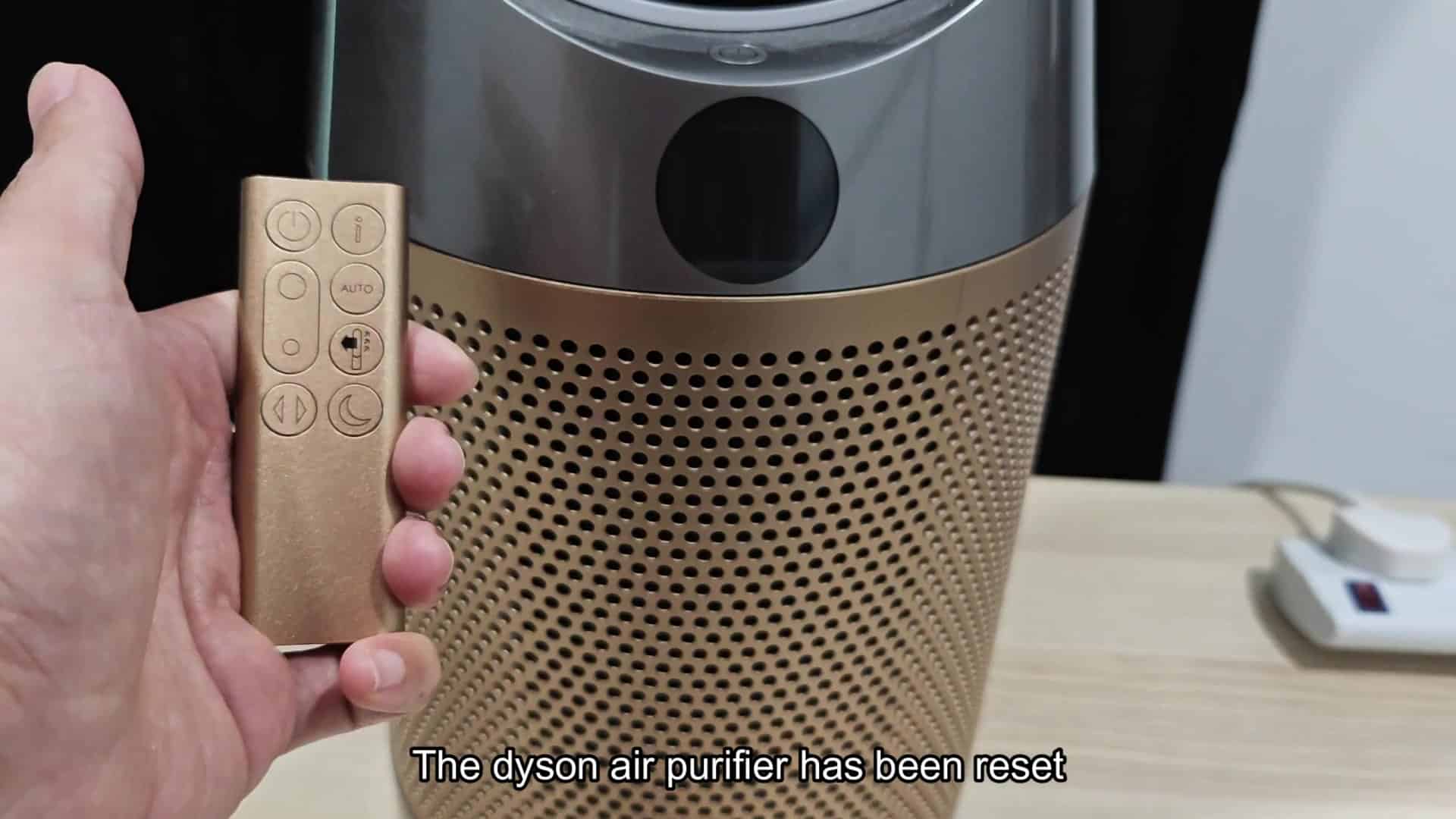
Pressing down on both of the power buttons at once caused the thing to enter its reset mode. The gear icon appeared on the circular screen briefly and it cycled through some diagnostic codes quickly, it’s prepping it for new network pairings.

Sure enough, the device flashed a message saying it was ready to be set up… The machine said it was back on track.
Even as it did all of this, you still held onto your remote control. All seemed stable and we was off to the races.
The Air Quality indicators were back to their normal display pattern on the screen. Green colors dominated the interface again and the +10 reading appeared along with a vertical bar graph. It was obviously waiting for connection to an app at this point.
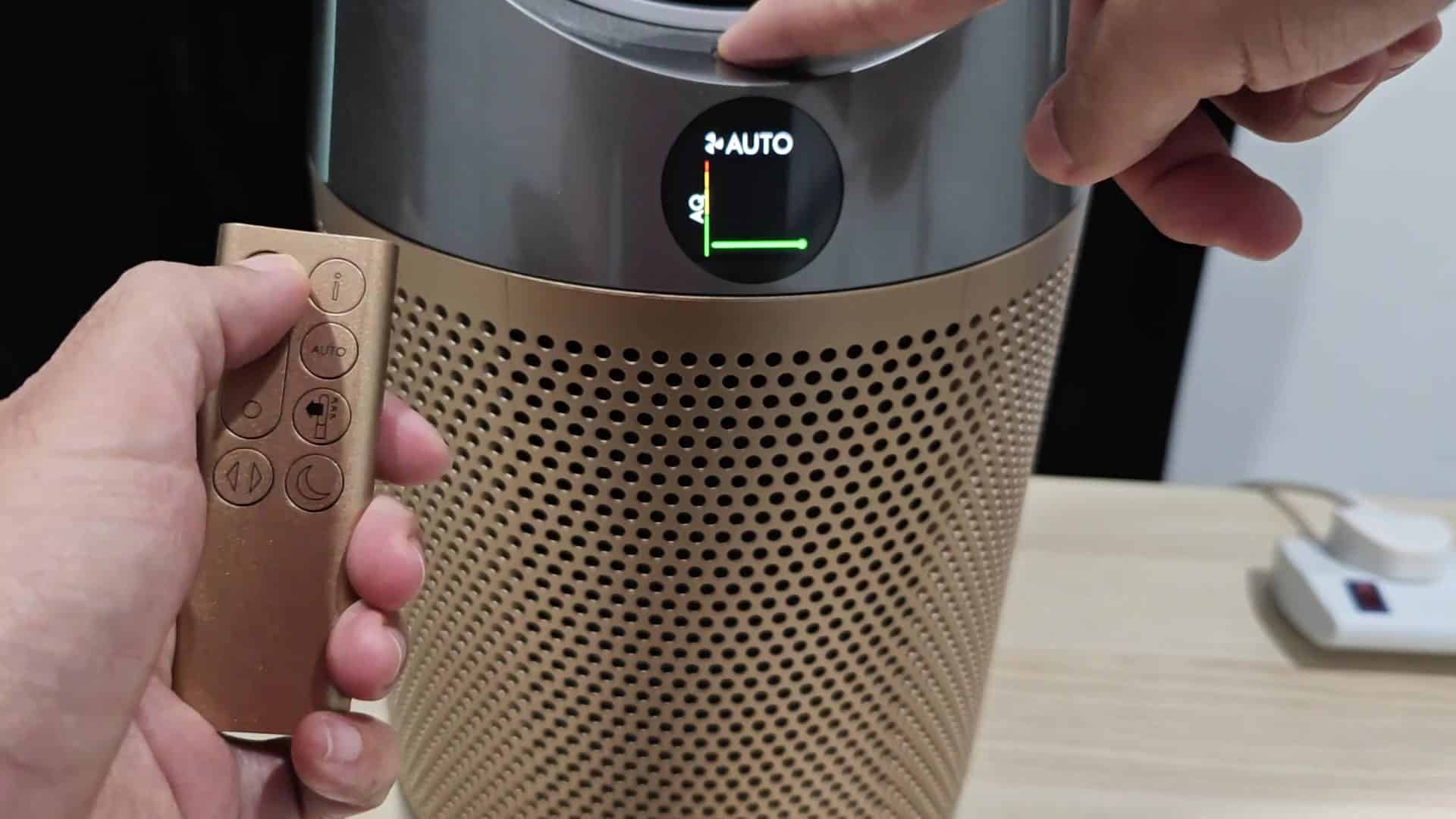
Then you got your phone, downloaded the MyDyson app straight from the app store and got started with that whole digital setup process. I opened up the app, tapped on “Add New Machine,” and then it wanted me to unlock all the features right now.
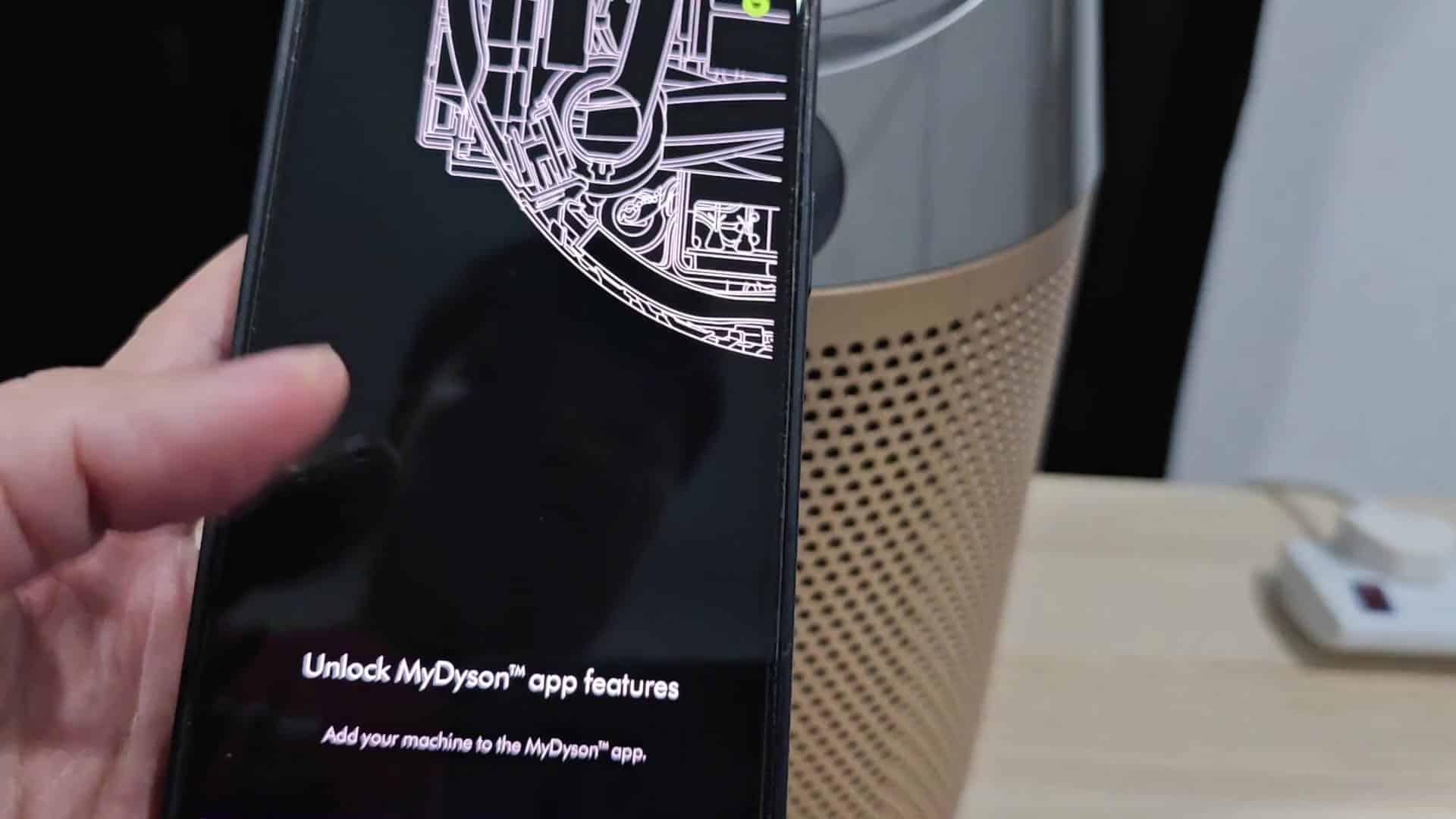
In the app, you selected the specific model from the device list available and you chose your exact model. From there, you followed the steps on-screen in the app and pressed button on the purifier when it said to. There was no error message, no delay… The process started immediately.
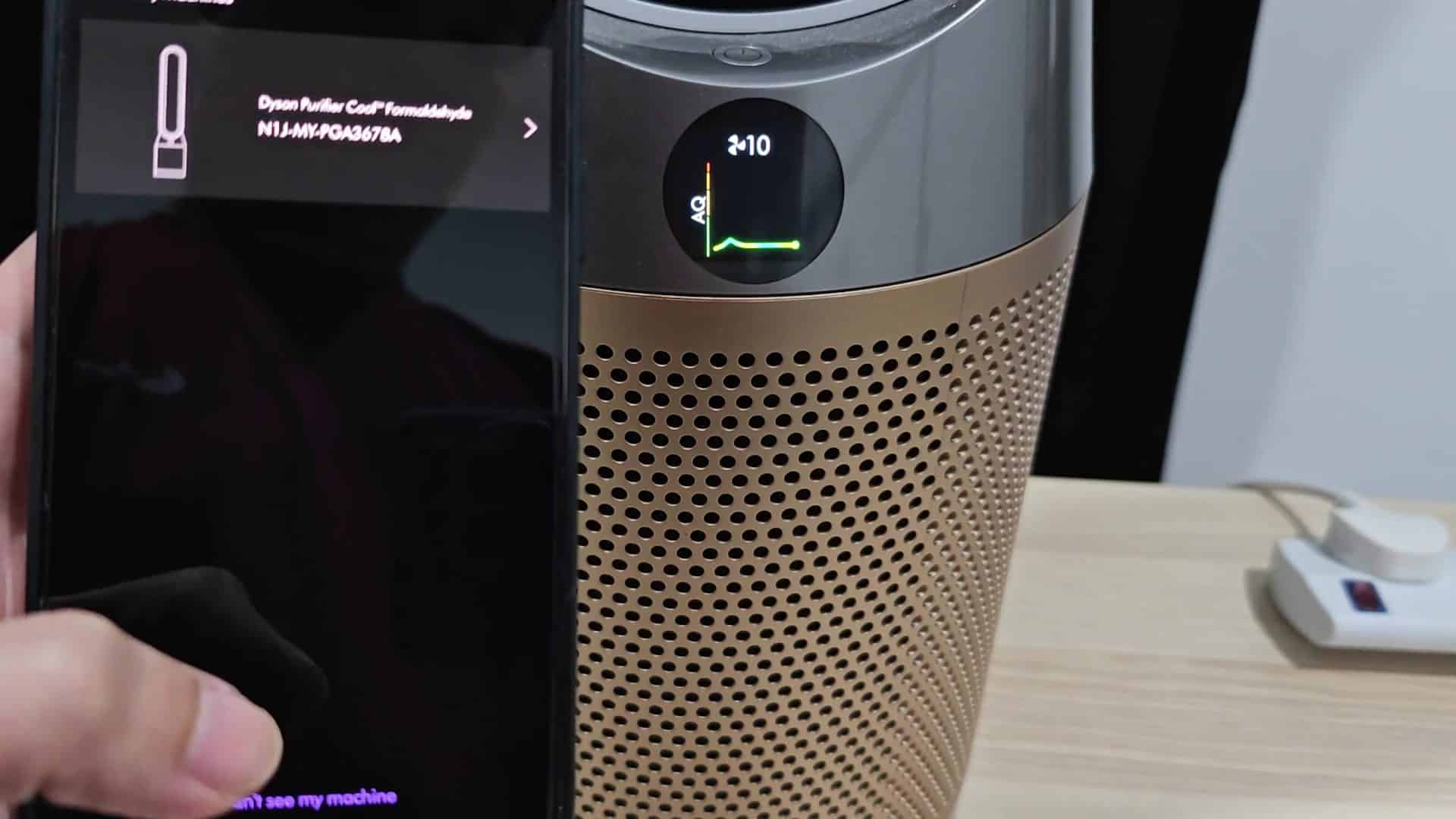
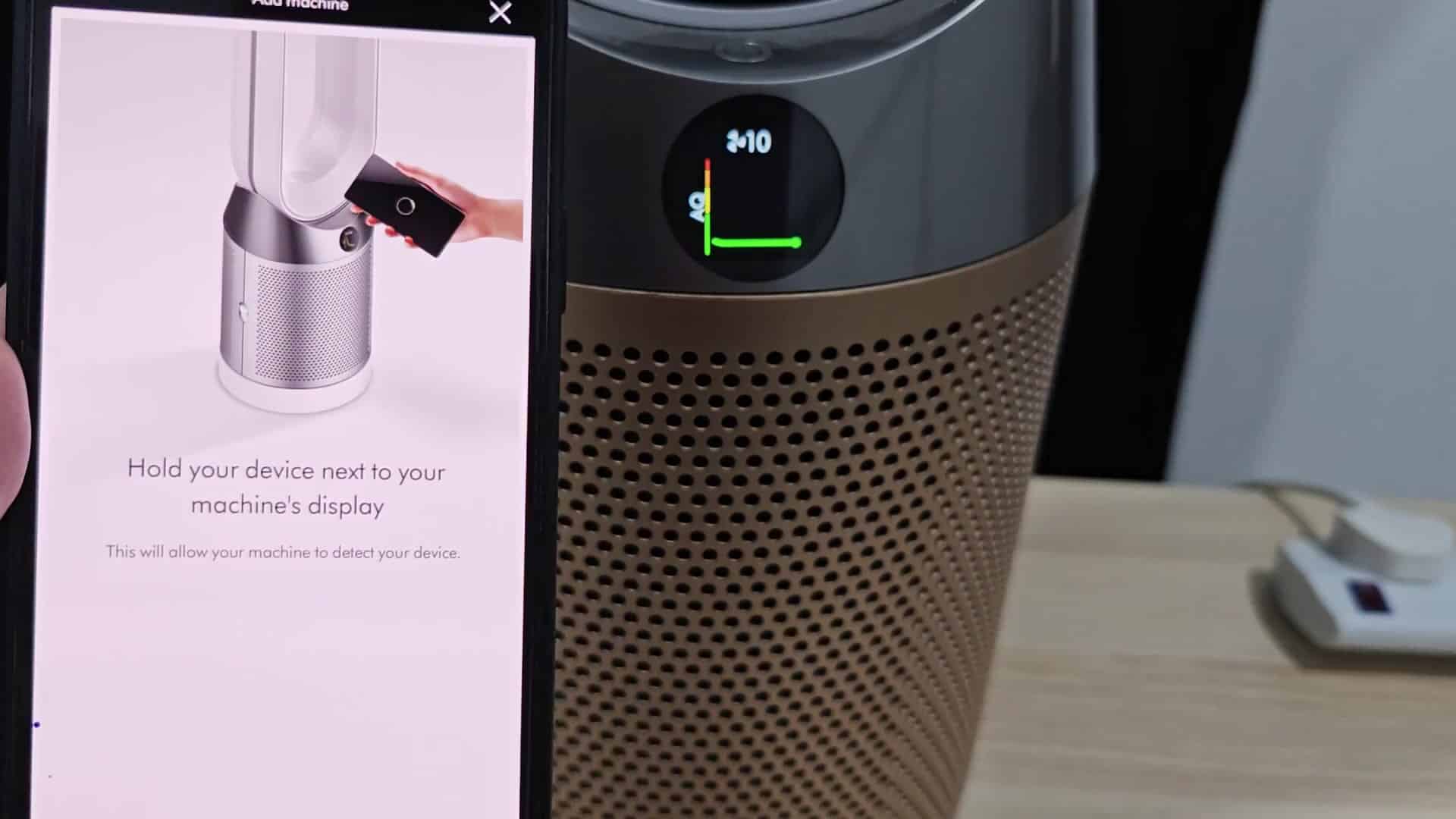
It took me through the first steps of pairing easily. It instructed me to hit the power button once more on the machine, which did indeed turn on the wifi pairing mode. You can tell it’s in pairing mode when the hand is pressing down on the power button on the screen.
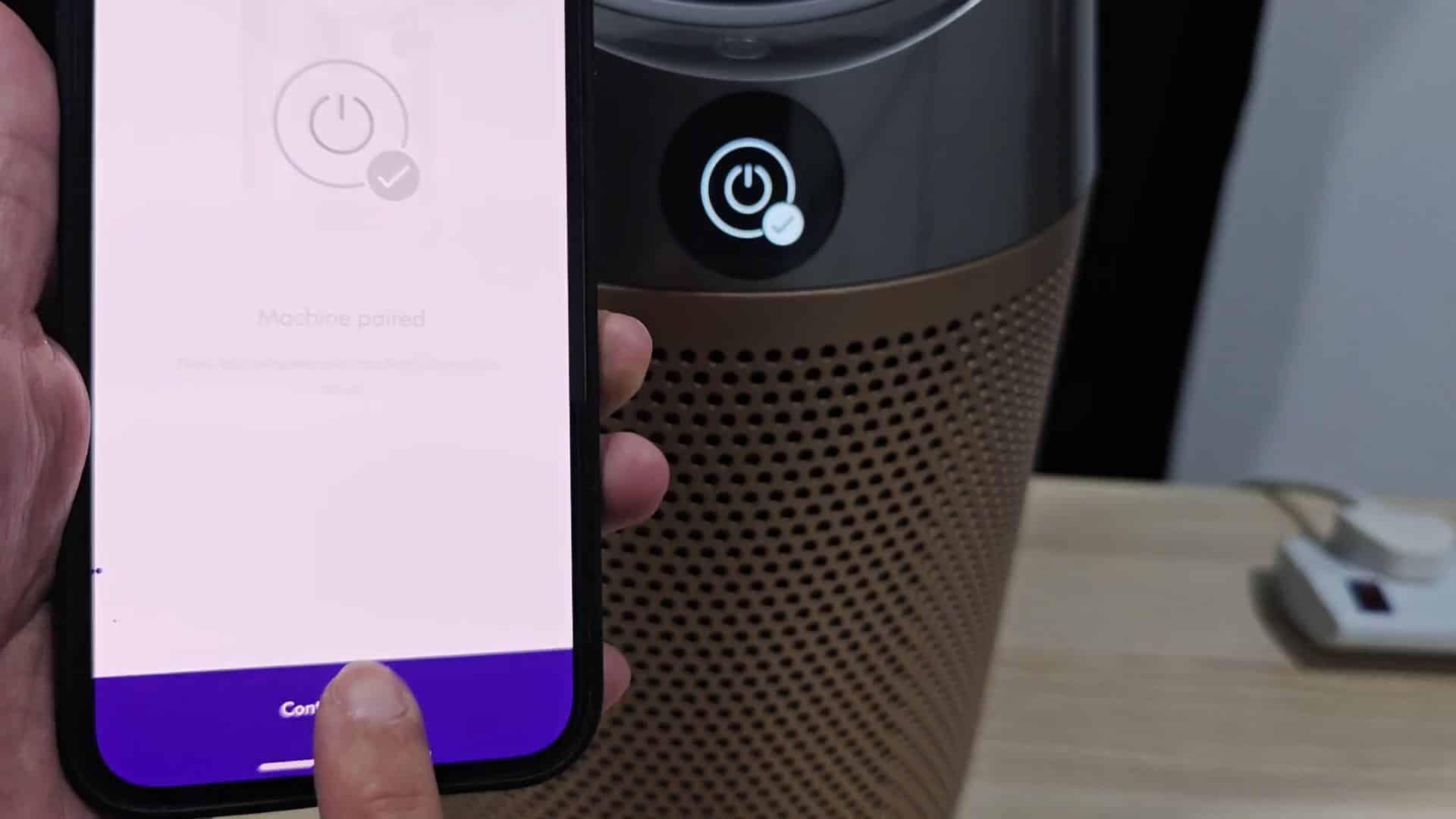
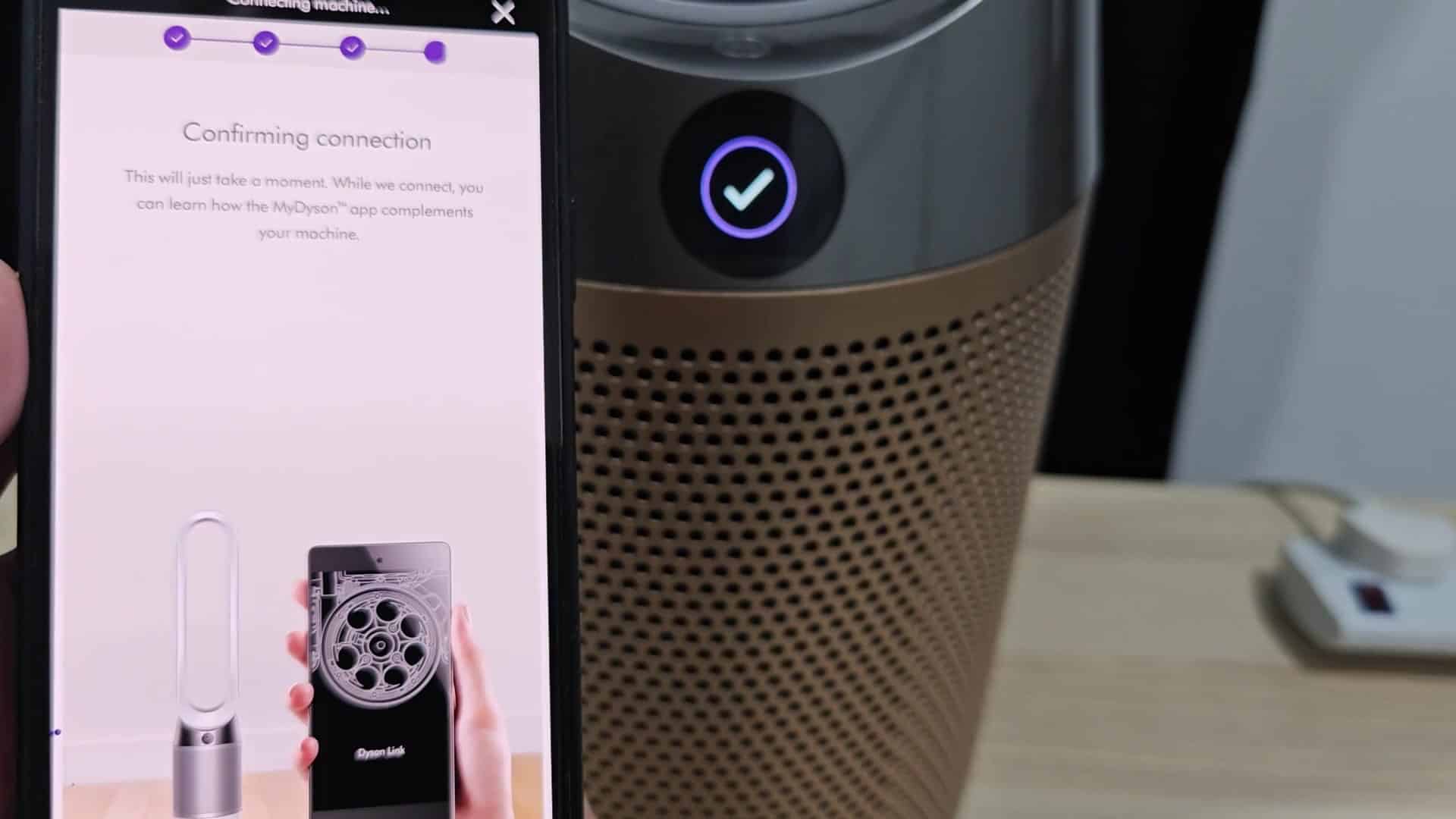
As the purifier display switched to a phone with a checkmark, you knew that your device had completed handshaking without any errors or timeouts in this phase. It didn’t go anywhere; instead, you were still on the same screen waiting for it to finish.

Then you chose your house’s wifi network. It had already popped up on the phone screen as a list of options to choose from. You scrolled down and saw your router’s name there and tapped it. Why? Mostly because it’s compatible with 2.4GHz band.
You entered your password and waited for the authentication process to complete before a large checkmark appeared shortly after confirming a successful link. The purifier display updated once more with clearly positive airflow numbers. Then the app proudly showed a “Connected” status on the screen.
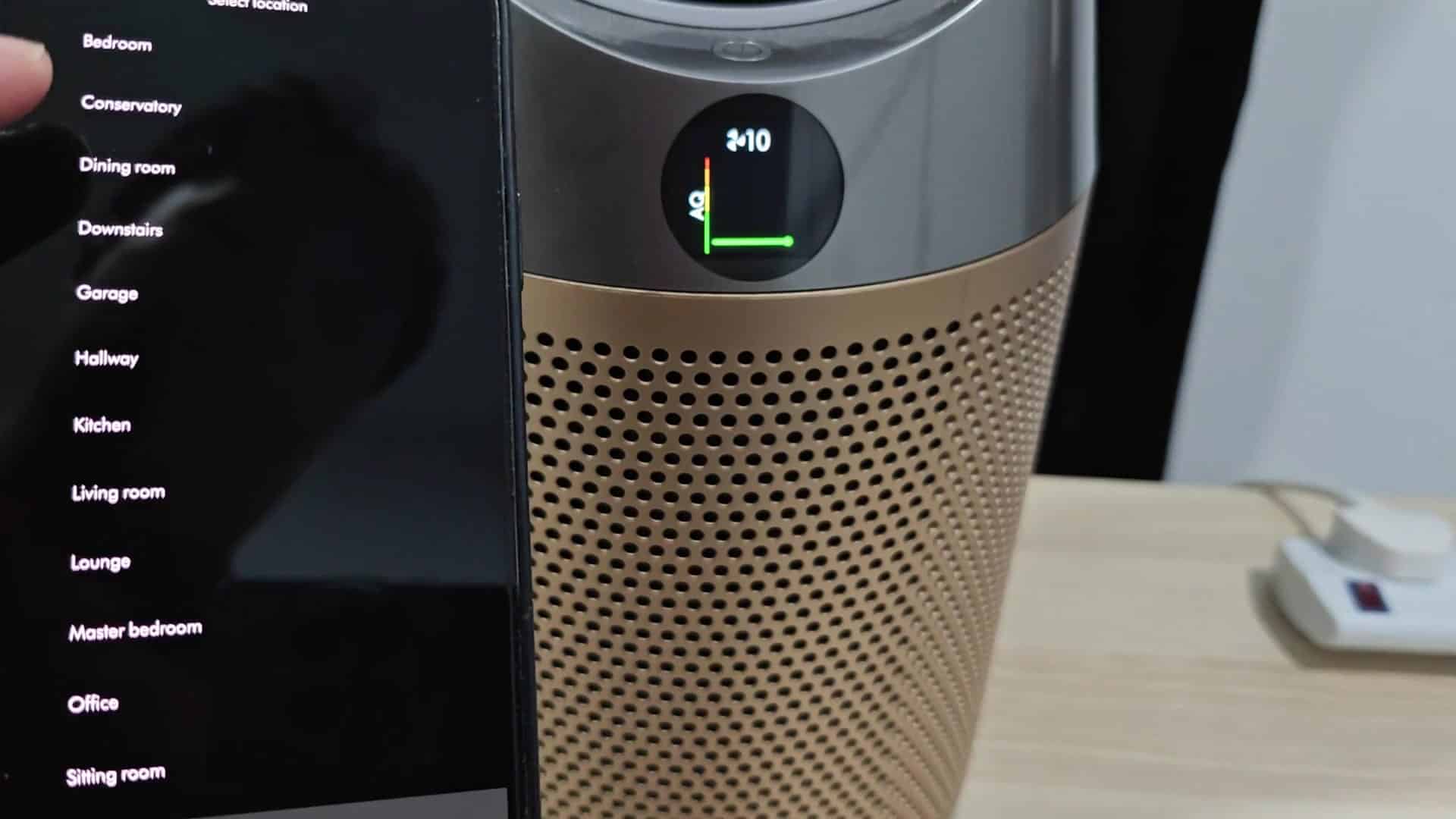
The app requested location assignment within your home environment by listing several common rooms like kitchen, bedroom, and office.
Next, the app asked me to assign a room in my home environment where I’d be using it most often, including typical options such as kitchen, office and bedroom. By selecting Office, the app could help track the air quality in that specific room moving forward.
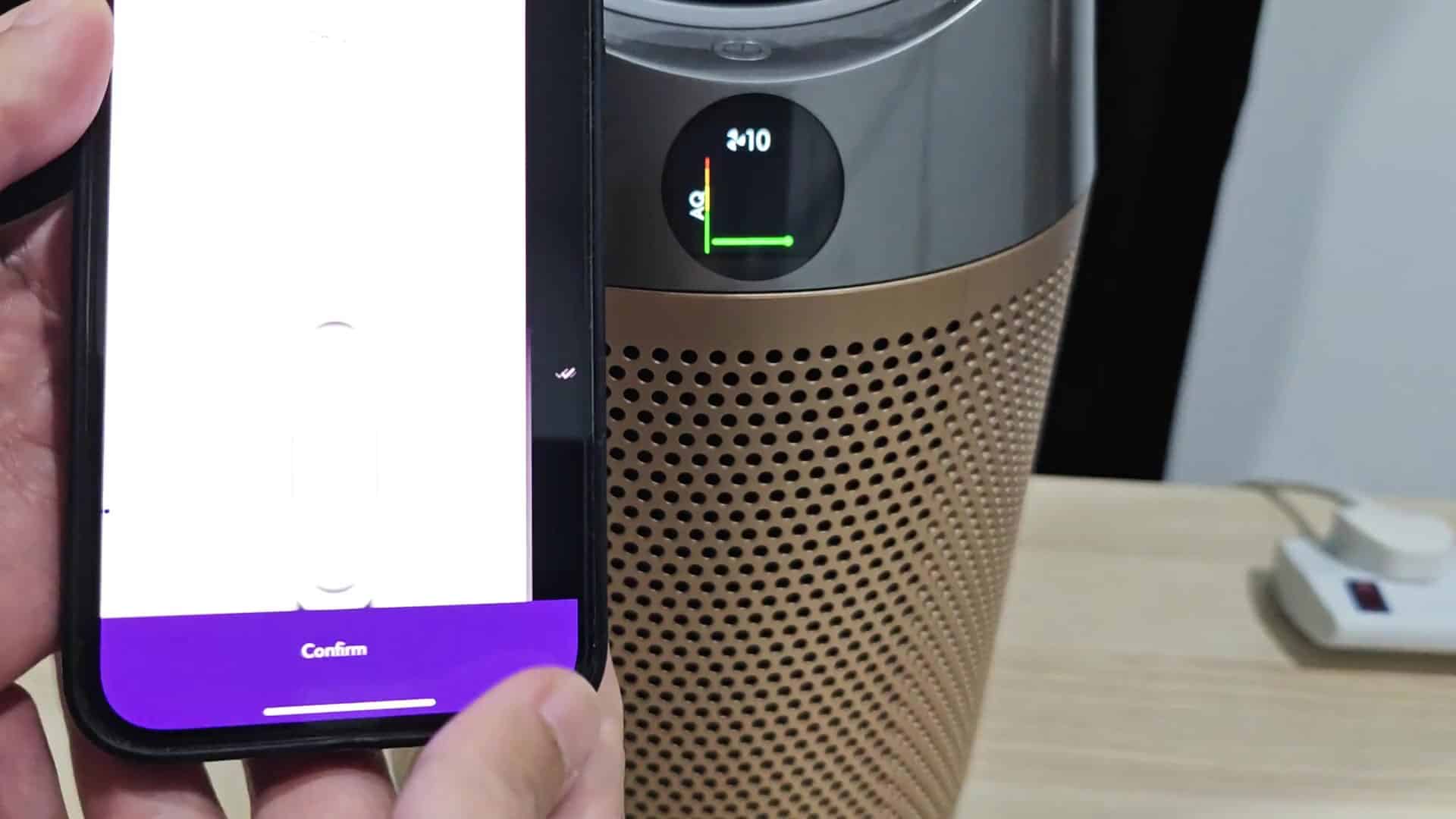
In this case, you scrolled over to another screen and saw a room-level controls interface with a basic slider. This allowed you to easily tweak fan speeds remotely after seeing the layout at first glance.
As expected, it showed a healthy Good on the dashboard alongside detailed environmental data collected from that space. (Humidity and temperature figures appeared.)
It was also displaying numbers for HCHO levels. These have been monitored and logged because it was in auto mode, the default setting.
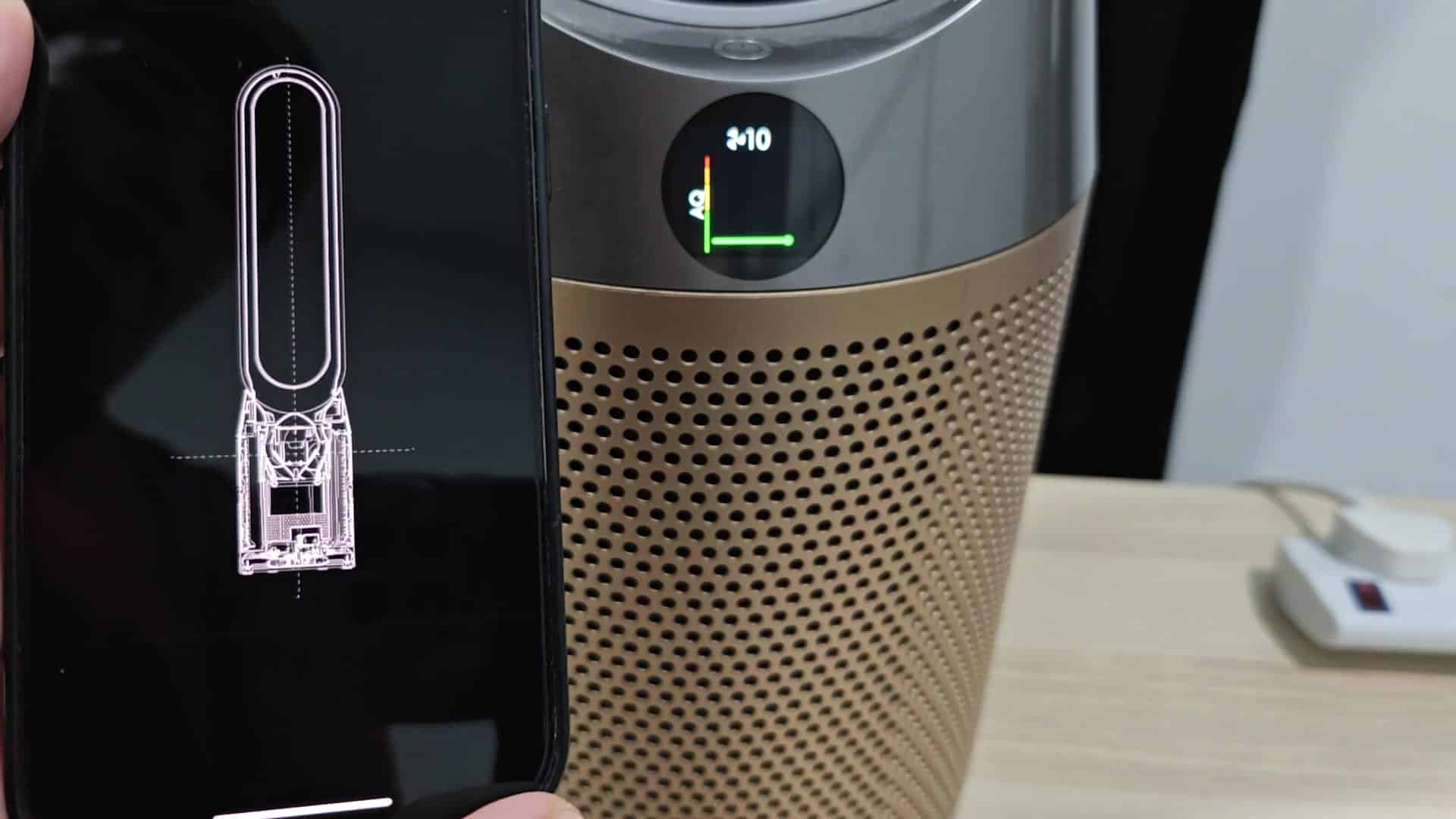
Setting the fan speed to ten lined up perfectly with the slider position in the app. You knew you had checked all of the settings and that everything matched how it should of been set on the unit itself. Everything was green indicating a good stable reading for all the parameters being monitored, which meant the system was now fully connected between software and hardware.
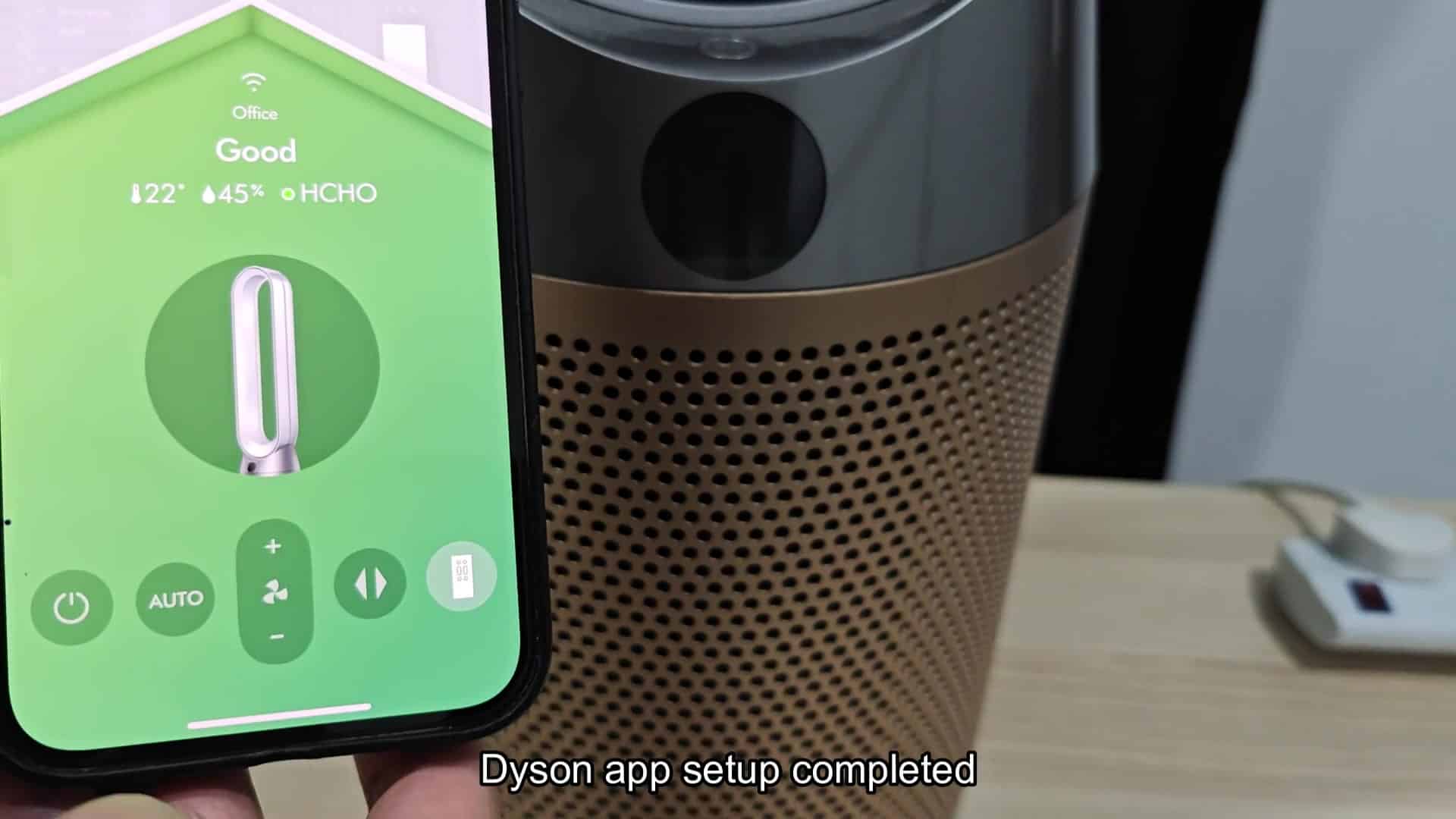
During testing period, air quality were consistently good, and the final screen indicated that everything had been set up completely with no issues. Humidity was at a seemingly normal-for-the-season forty-five percent; temperature readouts were also stable at roughly twenty-two degrees Celsius.