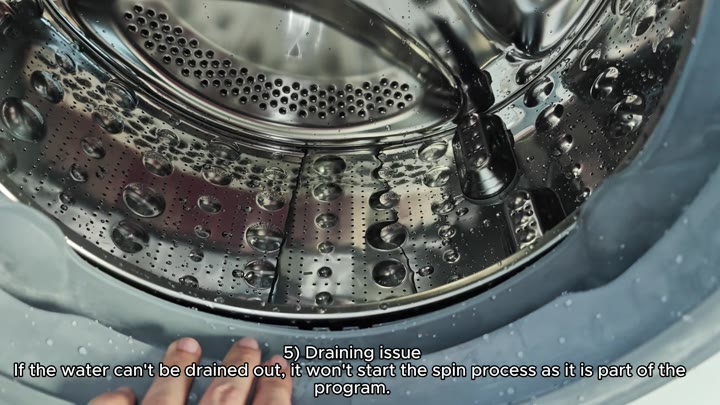
When your LG washer-dryer combo fail to complete the spin cycle, you can begin troubleshooting with several different component. It’s a step-by-step process: examine both external safety switches as well as internal mechanical parts.
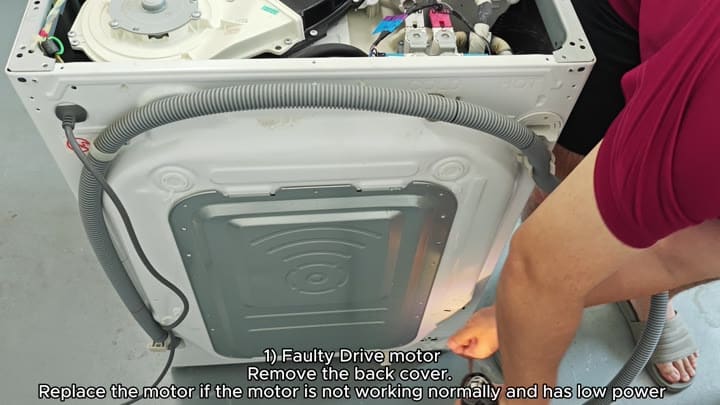
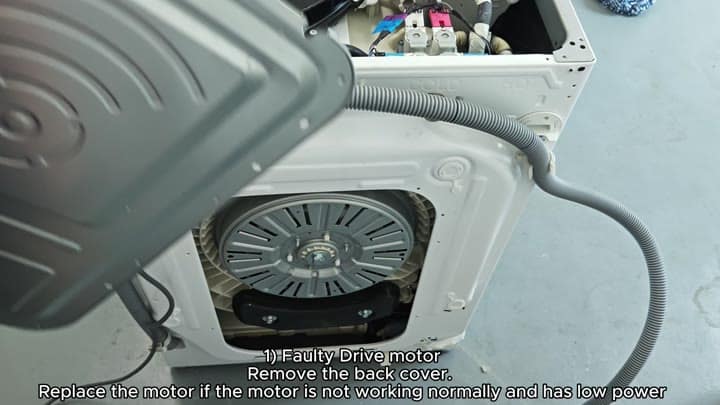
First, remove the rear cover panel; check the wiring harness attached to drive motor itself. A faulty drive motor is one of most frequent causes of this failure. When the motor put out not enough power, it lacks enough torque to perform the spin cycle. Replacing the motor will restore full power and usually correct the problem.
Mechanical Component Checks
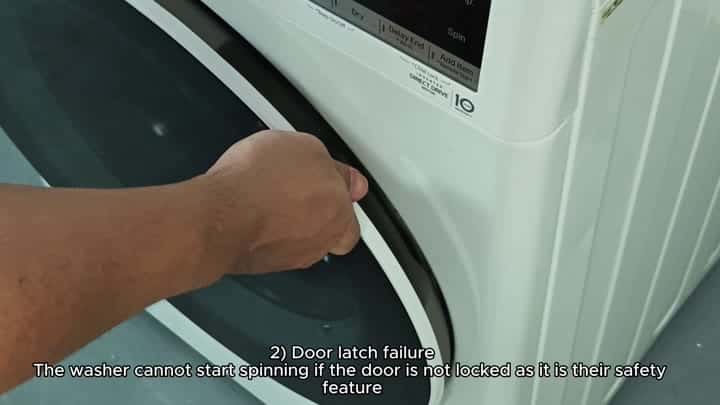
Next, you head back outside to examine door latch mechanism itself. Because this thing spins at such a high speed, there’s also a safety feature that requires the door to be completly latched shut before start of spin cycle.
The machine won’t spin unless it believe the door is closed. There’s a built-in safety feature. If the door latch doesn’t engage propery (and you can check this by looking at it, it’s normally an easy fix), then the machine won’t think the door is shut. This means it won’t go on.
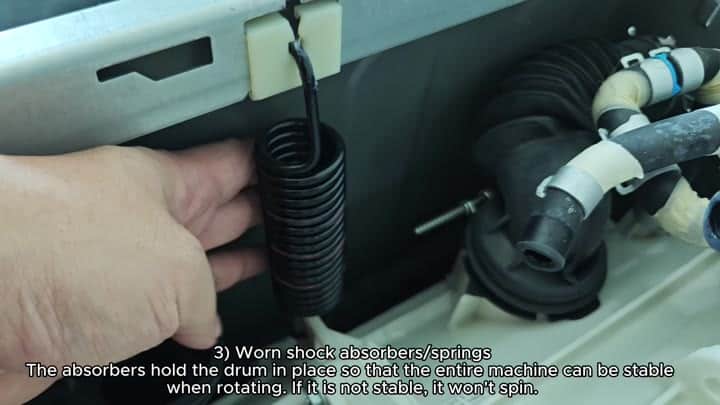
You then examine suspension system (springs and shock absorbers). This keep the drum in place when it rotates at high speed.
When the springs and/or shocks gets too worn out, the drum can become unbalanced. Because it would of been dangerous for the drum to continue spinning while imbalanced, the machine stops itself from doing so. Once a new set of worn parts are replaced, it regains balance, and the cycle continues.
Next you’ll focus on the electronics (control board/power module). Look at this with a flashlight. Often you can just look at it and find obvious failure point, like burnt spots on the circuitry.
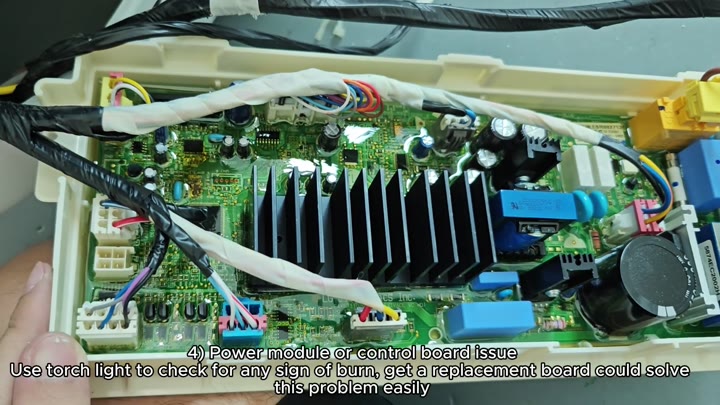
The board has all kinds of connectors taped up, resistors, and capacitors. A common fix is to replace the board if there’s evidence of damage/burning.
You use a flashlight to look for any burnt spot on the circuitry, as visual inspection often reveals obvious failures.
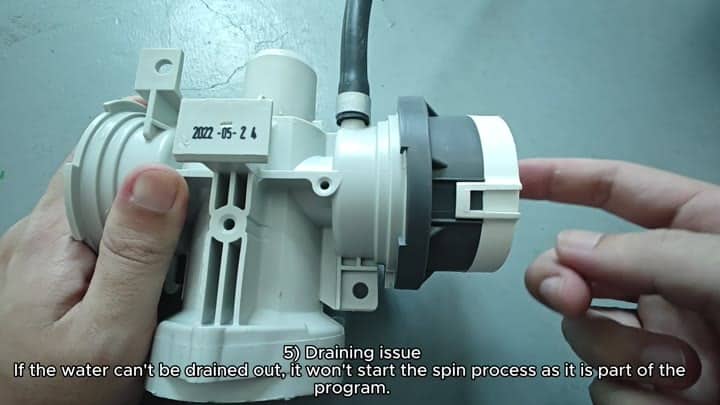
Lastly, you verify the drainage system. Water needs to drain out before start of the spin stage. Based off the program logic, the machine can’t proceed unless it knows there’s no water in washer.
So, you look at the drainage path to see if anything is blocked and remove any clog so that water drains propery. Check the pump assembly as well for any debris. When the water drain properly, you’re good to go and it’s time to spin!