
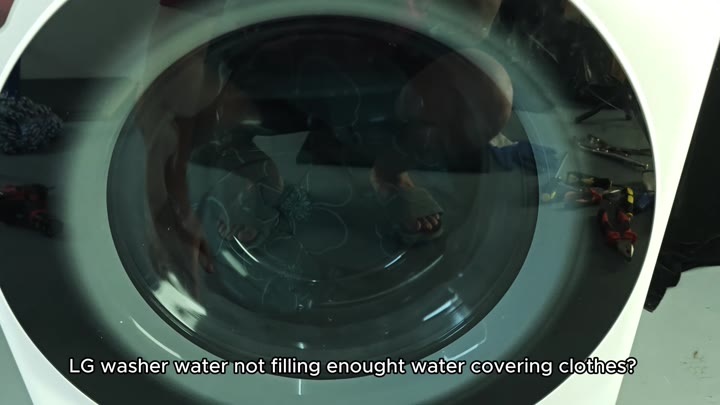
You look down into the drum. There are no wet items, just dry clothes sitting on the floor of the drum. If you’ve recently pressed start for a load of washing, you might be confused.
Somehow the machine is having difficulty drawing sufficient water to submerge the clothes. This low water level has interrupted your day. What’s going on? Why is there such little water inside? Time to investigate.
Test the Electrical Components
Start with the inlet connection. Over time, filter on the inlet valve collect particles from your supply lines. That limits water flow considerabley.
With needle-nose pliers, reach into the port. There’s a little mesh filter just inside the opening. Pull it out carefully. It’s full of junk. Remove the filter and problem is solved easy.
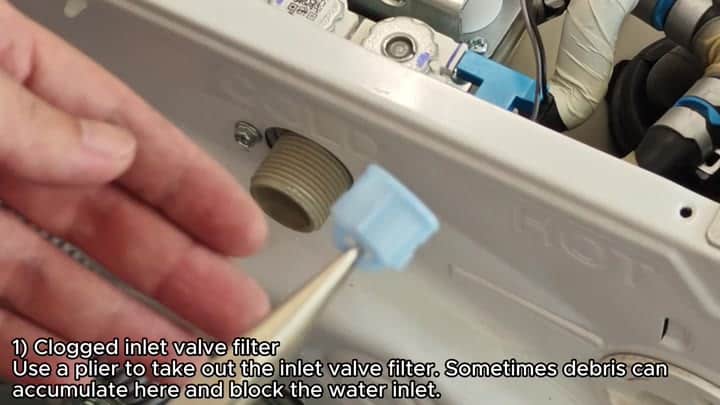
Clean Filter: Even if the filter is cleaned and the water doesn’t fully fill the drum, you could of have a bad solenoid inlet valve. The solenoids is what control when water flows into the tank.
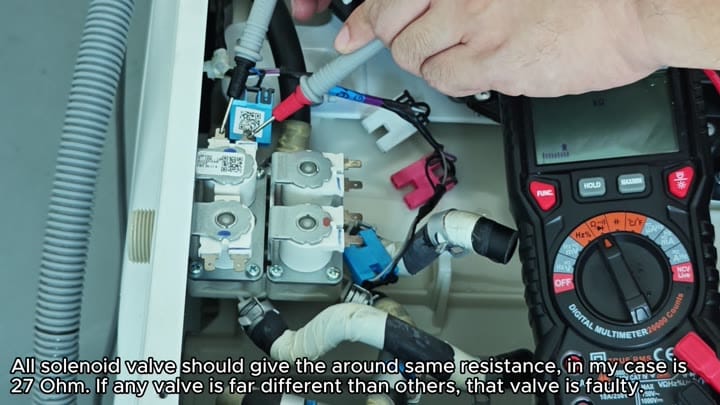
Use a multimeter to test for resistance on the solenoids. All solenoids should reads the same thing. Each solenoid should read around 27 ohms on some models. Anything way off base on one will be a bad valve.
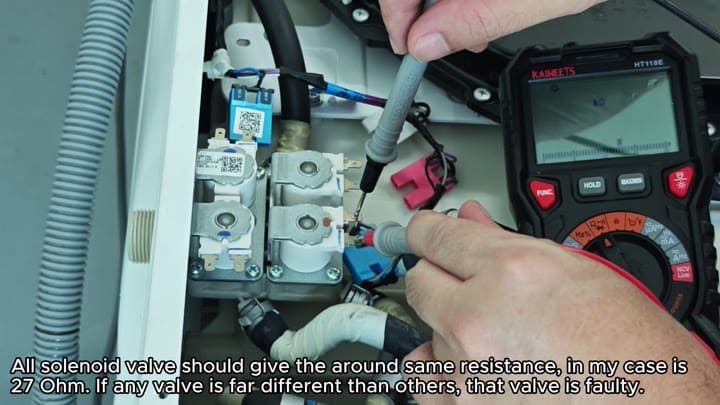
Replace the broken valve.
So how do you test the valves? It’s simple. Connect the probes to the terminals. Your multimeter displays a number, which is the resistance.
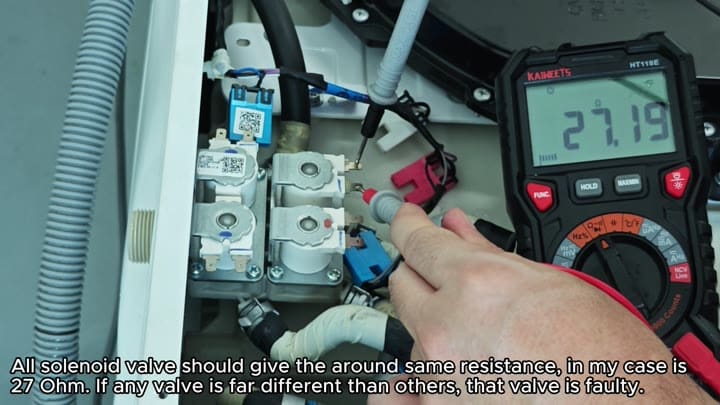
As they continue to stabilize, the numbers will remain static in the ballpark of 27 ohms. This means that the coils is electrically sound. If there was an open or shorted coil, machine would not be able to draw in water.
That’ll save you a bunch of guess work.
Perhaps it’s not an electrical/mechanical thing in the water path at all. Perhaps it’s the water-level sensor. The water-level sensor measures how much water there is in the drum.
If the water-level sensor cannot sense the level accurately, it signal the machine to stop filling prematurely. That avoids overflowing the drum, but it also avoids getting enough water in the drum for a good wash.
So you check out the water-level sensor housing. That appears to be intact. But sensors can still fail, even if nothing look wrong with them.
You suspect this part if the fill stops too early.
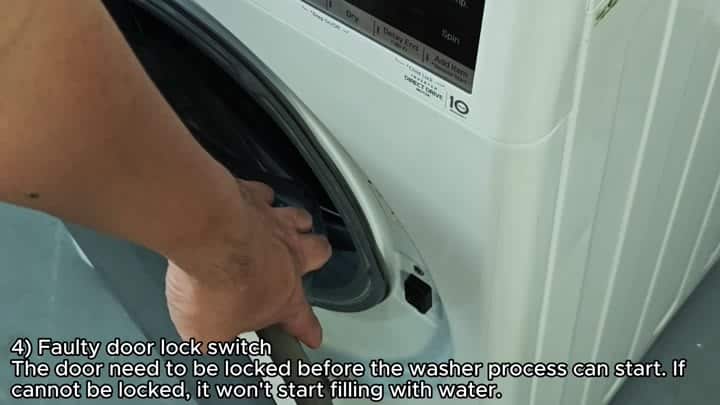
The other common weak link is the door-lock switch. If your door isn’t completely locked, no cycle will ever begin on your washer. If the latch doesn’t catch, it stop dead in its tracks.
Try shutting the door tightly and hear the click. When the lock doesn’t catch, no water enters. It’s like a simple logic gate in the system. If the cycle never starts at all, you check the latch mechanism.
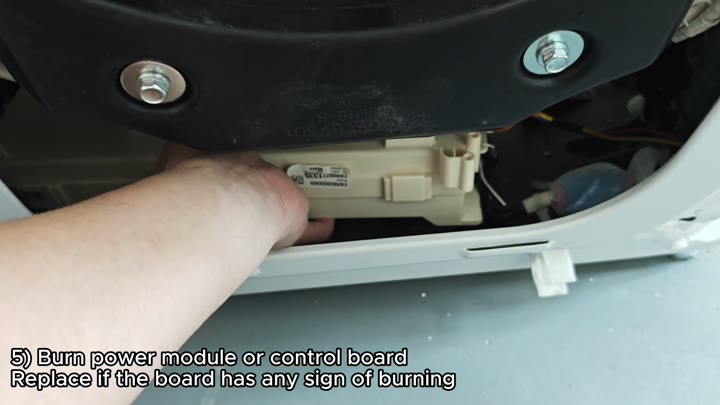
And lastly, take a good look at the interior electrics. Fill problems can occur when there’s a bad control board or power module. Take out that panel and have a peek inside.
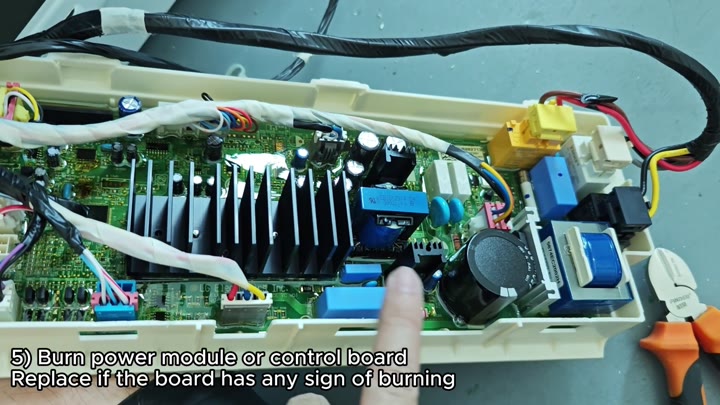
Examine the board for melted components or scorch marks. If it shows any indication of burn, that board’s toast. Your unit might also have a green circuit board with various capacitors and heat sinks. It looks clean. However, if your unit has been damaged, this circuit board will need replacing to.
It’s no quick fix.
It’s a systematic troubleshooting process. First, look for the most obvious physical obstructions. Next, it’s the electrical stuff. Lastly, it’s the safety switches and sensors.
It’s logical. It’s cost effective. It’ll save you money and time. Clean the filters, make sure your valves are reading correctly, and away she goes.
Frustrated? No problem. You know what the problem is. You don’t overlook the little things. Little things can be the answer.