
The latch mechanism sits in the gap at the edge of the door. The first thing you look for is the edge of the door. Seems easy enough, right? The first thing you look for is the edge of the door. Seems easy enough, right?
But getting the knob off isn’t as easy as it seems. Forcing anything can only end one way; broken plastic and stripped screws, and you don’t want that. So out comes a flat, thin, slim pry tool. Slide it up under the latch plate, lightly pressing in the door frame.
Reassembling the Door Lock
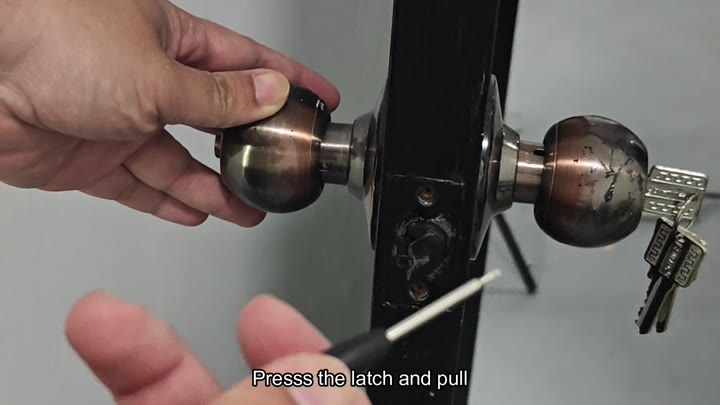
Apply slight pressure, but don’t force it too much; there’s more give than meets the eye and the tool provides the leverage. As soon as the latch releases, there will be a soft “click” sound and then you’re off to the races.
With the latch retracted, the knob is now loose, so pull firmly on it, there’s no big fight, but it’ll come right out. Friction and tension holds everything in place, so all you have to do is release that tension. Again, don’t pull on it hard, steady pressure is best.
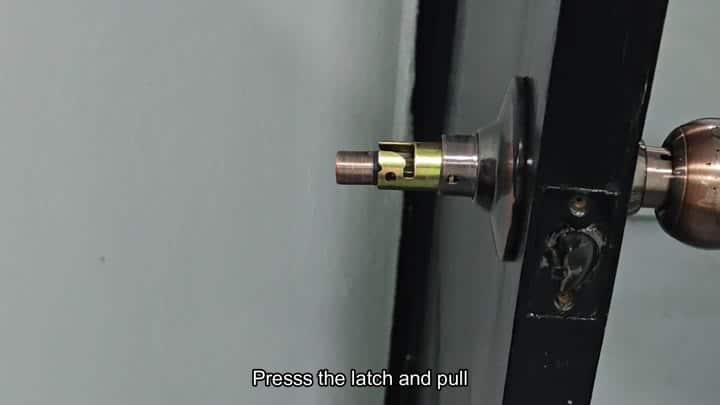
So now you can see the inner workings. Also note that the mounting screws secures the lock cylinder. And, a standard flathead screwdriver will do just fine here.
They’re brass colored, like all the other hardware, and come right out with a counter-clockwise twist of your trusty screwdriver. No corrosion, no rust to battle. Nice. Pull ‘em both out entirely and lay ‘em down on the work bench.
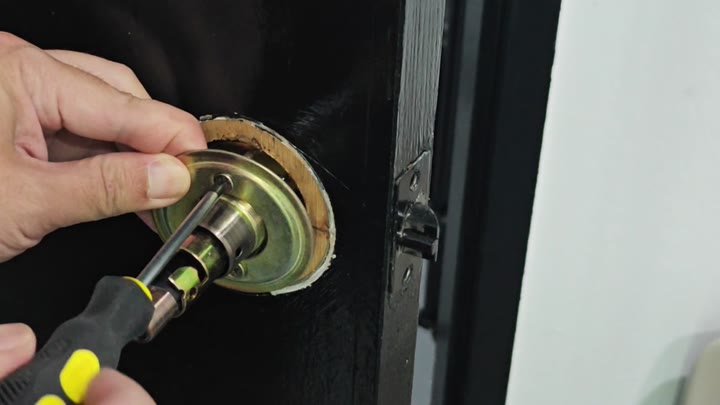
Now that the screws are removed, the lock cylinder is free to come out. If you pull it straight out of the door, the face plate will come off with the main body. The entire thing come out at once and now there’s just an empty hole in the door.
You can clearly see the wood grain, and it’s quicker than you thought it would be. All you need are basic tools: a screwdriver and perhaps a pry tool. If you thought it’d be more complicated, you were wrong… it’s straightforward.
Once you remove the outside knob, the latch assembly come out, and the inner parts follow. Unless you’re replacing individual pins, there’s no reason to take it apart any further. Just pull the entire thing out for removal.
Feel how solid it is while you’re holding it in your hand. It has good quality construction; it’s heavy and made of metal. You do not inspect it further because your goal is just removal. This isn’t about clean up or repairing anything; you just want it out. Leave it alone.
The reverse process is putting it back together. Slide the latch back into place. Tighten up those screws. Insert the cylinder and line up the screws. Slide that knob back on and push it down till you hear that click.
It takes less than five minutes from start to finish. This isn’t your first rodeo on other doors. Some are easier, some are trickier. This one falls somewhere in the middle as far as basic mechanics go.
Clean removal with no mess to clean up so you really like that about the process. No damaged finish, no paint chips, just clean.
Then you put down the old lock on the table, and it’s quiet there. It is ready to be stored away or replaced, depending on what happens next. But that doesn’t matter to you, because now you’re done.
Now the door is naked and without either lock or knob, save for a hole in the wood. Looks funny like that. But then, it always does when there’s no hardware installed. It is a temporary situation, awaiting the next install.
And you step back and admire your handiwork and think ‘well I did pretty good’. Because you did. Efficiently and effectively. There were no wasted motions and no excess force. It was just careful steps. That’s how it’s supposed of to get done. Nothing was damaged or frustrating about any of this. You get just results. It was worth it.