
If your massage gun won’t charge and you’ve ruled out any obvious external issues like the power adapter (though do try a known working one), there might be an internal issue you can troublesoot. Try it with another known compatible charger, but if it’s still dead, the issue will probably lie with the case itself.
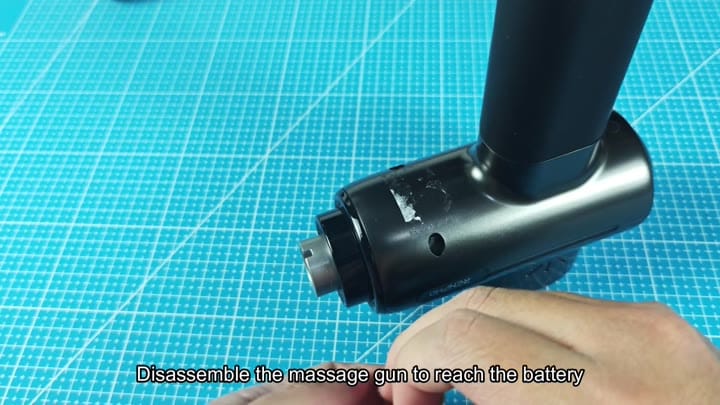
If the device remains dead, the issue are likely inside the casing.
Diagnosing the Internal Power Issue
In order to take a look at what’s inside, you’ve got to crack it open.
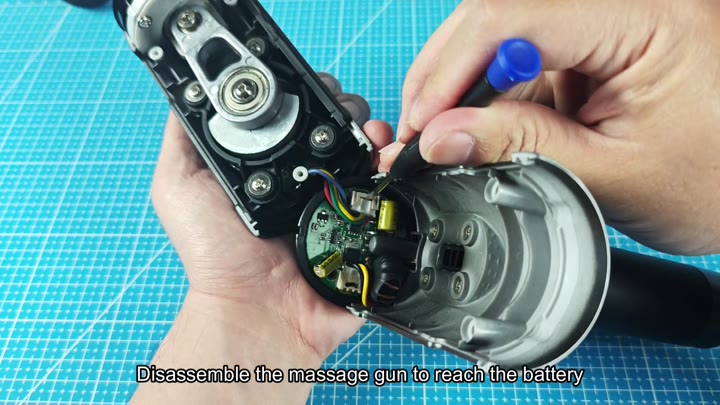
Then you pop off the outer shell with a tool. With minimal effort, the outer shell come apart to show the battery compartment and circuit board. It’s simple enough but the tricky part comes in not getting the wires wrong.
You’re able to view the inner workings including the wiring and battery housing. At this point things makes sense, so proceed with caution.
You use a tool to pry open the outer shell. The casing separate with little force, exposing the circuit board and battery compartment. The layout is straightforward, but you must avoids incorrect connections. The battery housing is accessible, and you can see the internal wiring. You proceed careful because seeing the internals clarifies the next steps.
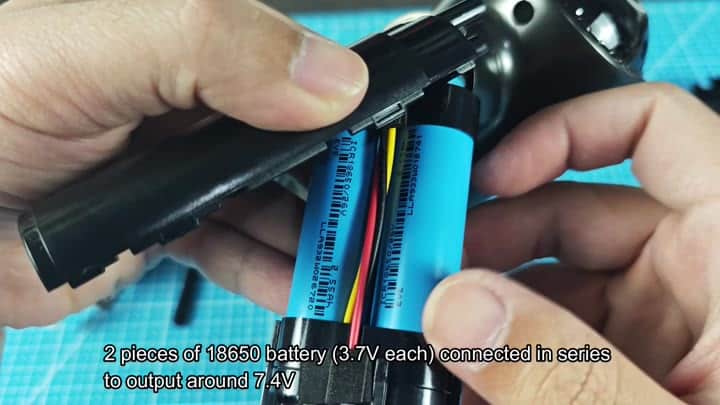
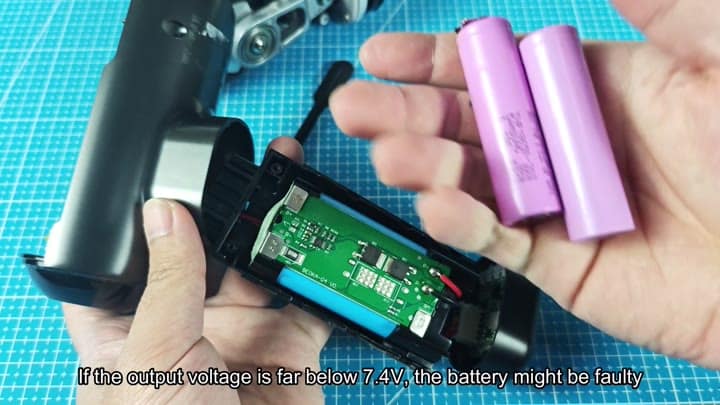
Two of these are found inside the device. They’re 18650 cells wired in series. A single cell put out 3.7 volts, so that means the pair together put out 7.4 volts. That powers the controls and the motor.
Those is connected by the red/black wires. At a quick look, it looks like they’re all hooked up well. But looks aren’t enough; you have to measure it yourself because what matters is the voltage output, different than how it looks.
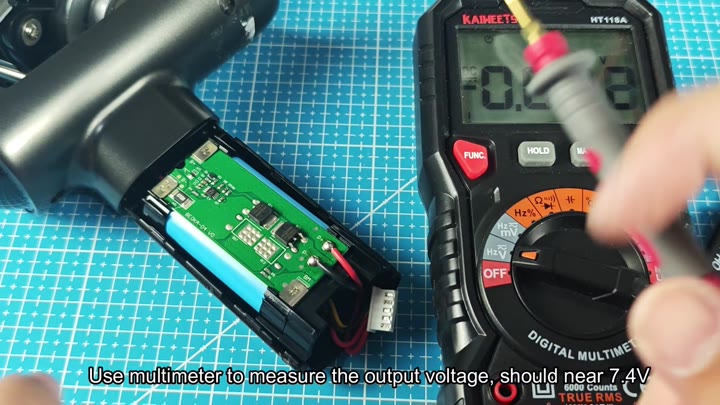
You use a multimeter to check the voltage.
Then you measure it with a multimeter. You set the meter on voltage and position one probe at each of the battery terminal position on the board.
It reads much lower than the desired 7.4 volts. That means you have a bad battery pack. Your cells has either worn out or died entirely. The test verifies your hunch, and everything else seem okay on the circuit board.
Replace the power source. You decide.
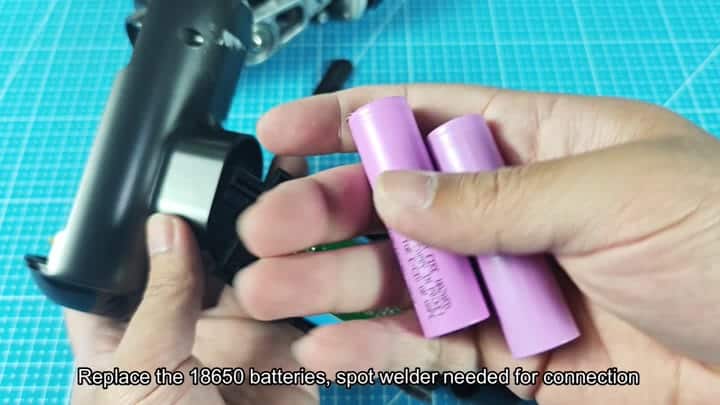
Two new fresh 18650 cells are your source for the swap. No sense in keeping nearly spent batteries. They’re out of the housing now.
The new ones go in, which are the same spec as the originals and fit nicely into the compartment. Now you are ready to connect them back up in the system and return it to a 7.4-volt configuration. Because it’s not a good idea to solder on a lithium cell, you should of use a spot welder to do the job right.
You want to be exact here
Again, you wire the new batteries back into a series configuration. Double-checking the polarity, you attach the red and black wires firm together.
It all looks good so you go ahead and verify that the voltage reads as normal. Yep, that’s a good sign, it means your fix worked. Because it was just a matter of replacing some hardware, it wasn’t really hard at all. Once you’re sure the parts are all accounted for, you shut the thing up properly.
Massage gun starts charging. Starts charging immediately after the repair is completed.
Massager does not hesitate. The charge was accepted. The repair was done correctly.
You’re glad you got it working propery. That was faster than you thought. Oh well…some fixes is just changing a few old parts.
Now the thing is good to go. In the meantime, you’ll keep an eye on the battery charge from here out. But for now, problem solved.