
The Teeho TE001 lock has an anti-peeping feature built into its logic. The way this works is unlike most smart locks. Usually, you need to punch in the exact code and nothing else. This one doesn’t care if there’s some noise before or after the right combination.
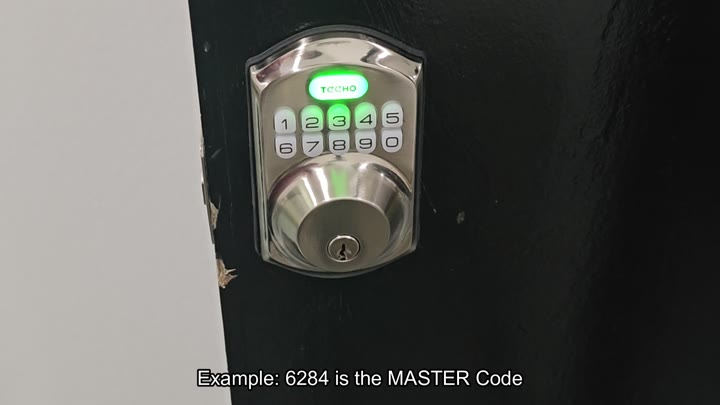
The master code for the test unit was 6284.
Its test number was 6284. To open that lock, you dial 6 followed by 2, 8, and 4. That’s normal.
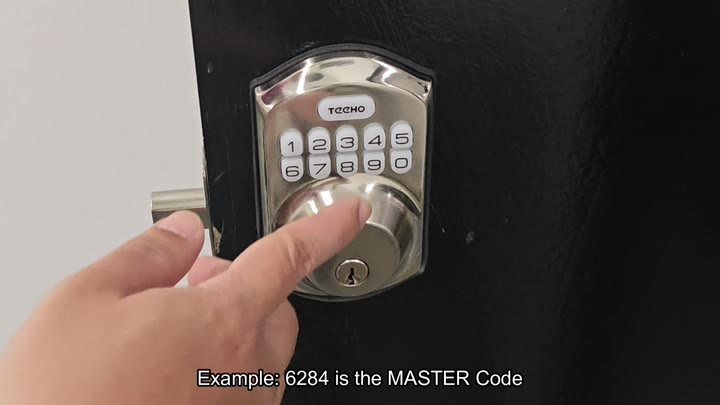
Understanding the Anti-Peeping Feature
But if somebody is behind you watching or standing nearby while you dial, here’s where it gets interesting: It lets you insert random digits preceding the real number. Dial a bunch of nothing, and then dial 6284 and there you go!
This confirms that the system accept leading noise.
So we know it’s taking the front-end noise.
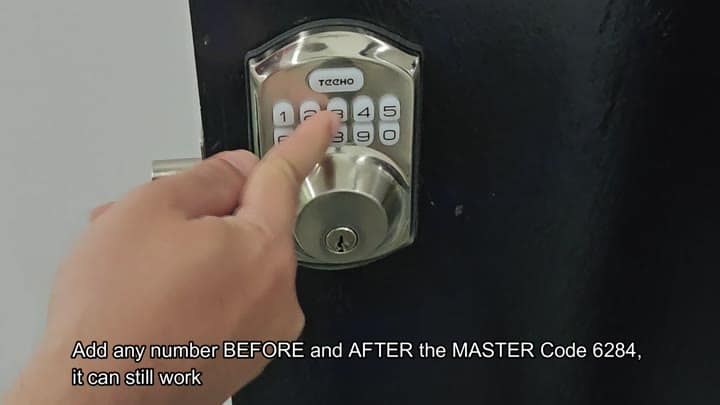
The same holds true with number padding too: You could type in the code followed by numbers. For example, enter “62849”; 9 will work as well. The system doesn’t even know that padding exists. It’s just looking for the core sequence in the list of numbers.
In a public setting, this feature offers some privacy. For example, you could enter a few random digits, followed by your own code, followed by another handful of random digits. In doing so, someone standing right behind you only sees a long string of digits. They won’t know which four digits are your actualy code. So there’s this privacy zone between you and them.
It is the same for the user codes. The sample user code we were given was 3872. That doesn’t mean you have to type out 3872 repeatedly. You can hide it within other digits. So if I hit 1, 5, 3, 8, 7, 2 and then 0, boom, the door will open instantly. Which means they accept leading and trailing garbage too.
The flexibility allows you to prepend digits, append digits, or do both.
You have the flexibility to prefix and/or suffix your digits. You can add random numbers before or after the code. It’s almost as if the lock runs through it like some kind of needle in a haystack algorithm. Except the garbage data is the haystack and the needle is your passcode.
So try it. Type in more digits before the 3872. Or after. Or both. Open the door. No delay. No error message.
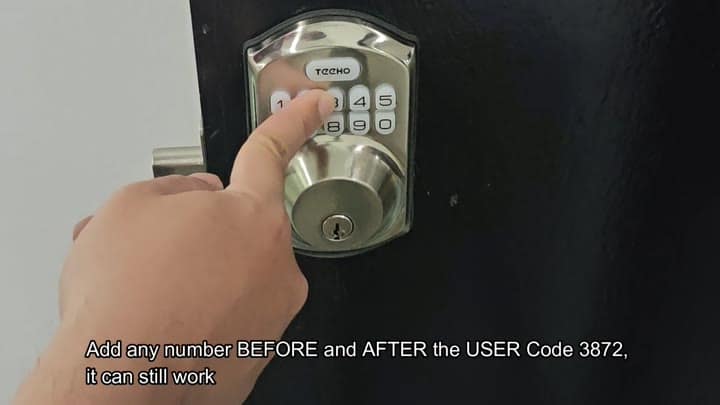
It just works. When you think about it, you should of have to hit the reset button and then wait for a timeout. But nope, it’s all handled by the firmware. Press away ‘til your heart’s content (or until your battery runs out). It’ll work as long as you’re entering the right code at the right time.
The TE002 and TE001 has this baked into their logic and it’s robust. There are no added settings or anything.
Chances are most folks enter their code and go about their business. Now they’re open for shoulder surfing. Padding only adds a second and you don’t even really have to think about it because you only need to remember the real code. Just make sure you recall your real one.
A backup would be the keyhole under the keypad. But in day-to-day use, the main entry method will be the keypad itself. With a privacy function, the keypad is far more secure. The white buttons feels responsive, and a green light illuminates it so you can see at night.
This is what you come to do all the time. You enter the code, then some random numbers on either side of it. And it works. If someone’s watching, you don’t think about them. The lock doesn’t care about the other stuff you’re putting into it. It simply opens up for you and you go on your way.